
What Is a Brand Mood Board (And Why Every Business Needs One)
When people hear the words brand mood board, they often picture a Pinterest board full of beautiful fonts, color palettes, and dreamy photography.
While those elements certainly play a role, a brand mood board is so much more than a collection of inspiration.
It's one of the first strategic steps in the branding process—a visual roadmap that helps bring your brand's personality, values, and overall direction into focus before any design work begins.
Think of it as the bridge between your brand strategy and your visual identity. Before designing a logo, choosing typography, or building a website, a mood board helps answer one important question:
What should this brand feel like?
What Is a Brand Mood Board?
A brand mood board is a curated collection of visuals that capture the overall look and feel of your brand. It combines colors, typography, photography styles, textures, patterns, graphics, and other design elements to create a clear visual direction.
Rather than focusing on individual design pieces, a mood board looks at the bigger picture. It's about creating a cohesive atmosphere that reflects your brand's personality and resonates with your ideal audience.
For example, a wellness brand might lean toward soft neutrals, natural textures, calming photography, and organic shapes to communicate a sense of peace and balance. On the other hand, a bold marketing agency might use vibrant colors, geometric layouts, strong typography, and high-contrast imagery to convey confidence and energy.
Neither approach is better than the other—they're simply designed to communicate different brand personalities.
Why Start With a Mood Board?
It's tempting to jump straight into designing a logo or picking your favorite fonts, but doing so without a clear visual direction often leads to inconsistency.
A mood board creates alignment before any design decisions are made. Instead of wondering whether a color, font, or image "looks good," you can ask a much more important question:
Does this fit the direction we've already established?
That simple shift makes every design decision more intentional. It also helps prevent one of the most common branding mistakes: creating individual pieces that look nice on their own but don't feel like they belong together.
More Than Just Pretty Pictures
One of the biggest misconceptions about mood boards is that they're simply inspiration boards. In reality, every element is chosen with purpose.
The photography style might communicate warmth, luxury, adventure, or sophistication. Typography can feel modern, timeless, playful, or refined. Colors evoke emotion, while textures and patterns add personality and depth.
Together, these elements begin telling your brand's story before a single word is read.
That's what makes a mood board strategic rather than decorative.
How Mood Boards Help the Design Process
Once a mood board is approved, it becomes a guide for every design decision that follows.
Your logo, color palette, typography, graphics, website, and marketing materials all stem from the visual direction established at the beginning.
This creates consistency across every customer touchpoint.
Instead of feeling like separate pieces, your brand starts to feel like one complete experience.
And consistency is one of the biggest factors in building recognition and trust over time.
Isn't Pinterest Basically the Same Thing?
Pinterest is an incredible source of inspiration, but it isn't a brand mood board.
Think of Pinterest as the brainstorming phase. It's where you explore ideas, discover styles you love, and start noticing patterns in what you're drawn to. Try searching terms like "minimal brand identity," "earthy brand aesthetic," "luxury branding," "editorial website design," or "wellness brand mood board." At this stage, you're simply gathering inspiration—not making final design decisions.
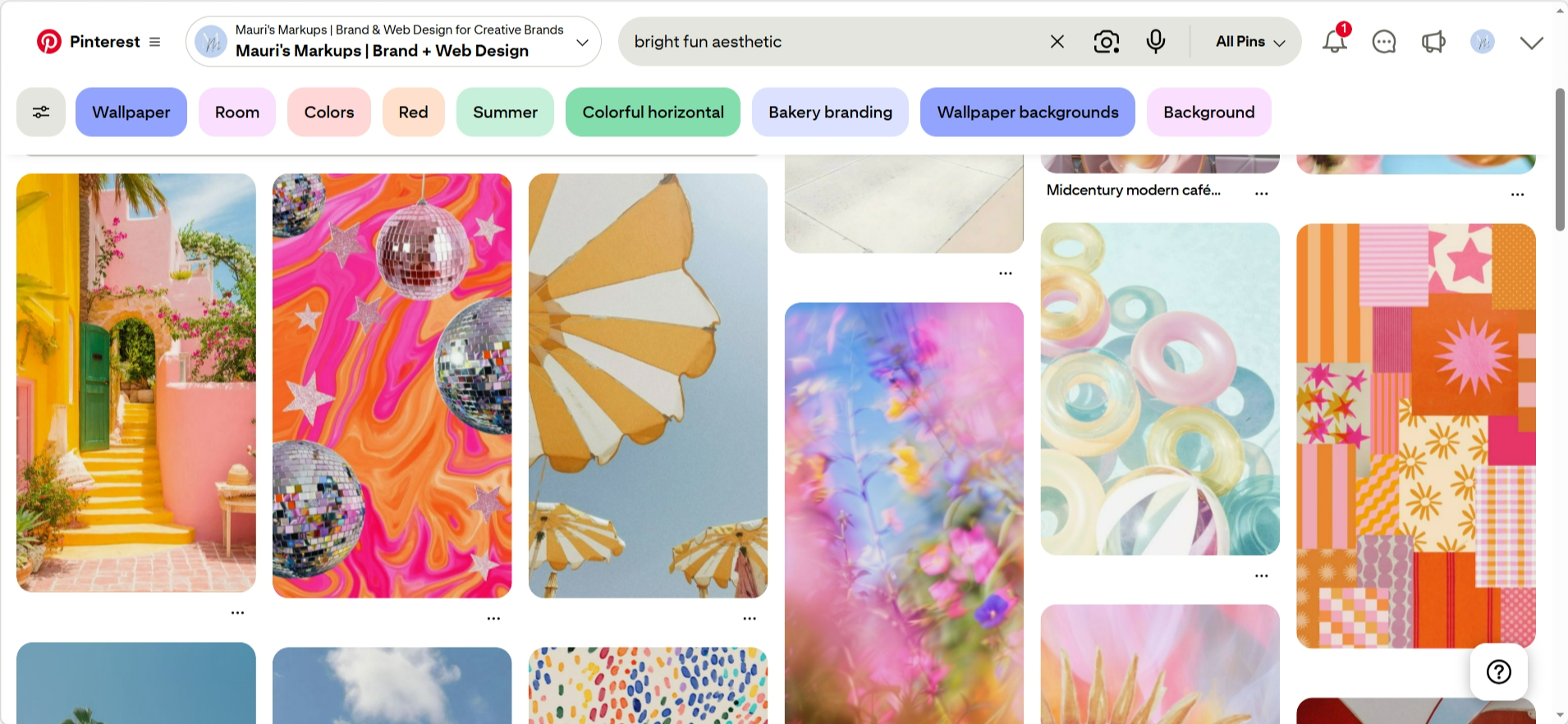
A brand mood board is where those ideas are refined into a clear, intentional direction.
It's easy to save hundreds of images that catch your eye, but that doesn't necessarily mean they work together—or that they reflect your business. A professional mood board takes that inspiration and filters it through your brand strategy, target audience, goals, and personality to create a cohesive visual direction.
It's less about collecting beautiful images and more about making thoughtful design decisions.
What You'll Typically Find on a Brand Mood Board
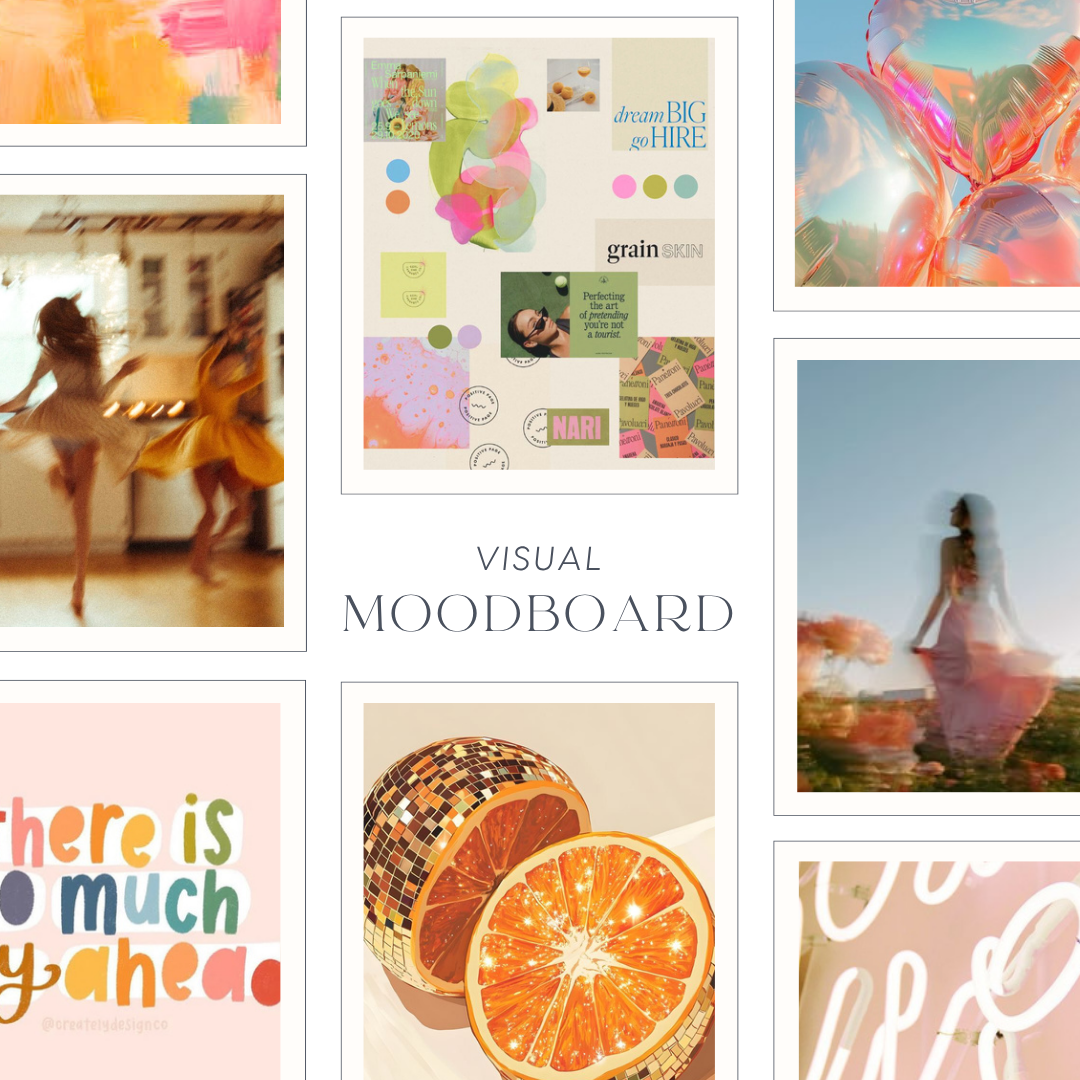
Every designer approaches mood boards a little differently, but most include a thoughtful mix of visual elements that work together to establish the brand's direction.
You'll often see carefully selected color palettes, typography pairings, photography inspiration, textures, patterns, icons, graphic styles, and examples of the overall aesthetic. Some mood boards may also include keywords that describe the brand's personality or visual references that help communicate the intended atmosphere.
The goal isn't to design the brand on the mood board—it's to create a clear vision that guides everything that comes next.
Why Every Business Can Benefit From One
Whether you're launching a brand from scratch or refreshing an existing one, a mood board provides clarity before the design process begins.
It helps eliminate guesswork, creates alignment, and ensures every visual decision supports the same story.
Even if you're the only person in your business, taking the time to establish a visual direction can make future decisions much easier. Instead of constantly second-guessing your choices, you'll have a reference point that keeps your branding consistent as your business grows.
The Bottom Line
A brand mood board isn't about choosing the prettiest colors or following the latest design trends.
It's about creating a visual foundation that reflects who you are, who you serve, and how you want your audience to feel.
When your branding starts with clarity and intention, every design decision becomes easier. Your logo, website, marketing materials, and social media all begin working together instead of competing for attention.
A mood board may be one of the first steps in the branding process, but its impact carries through every stage of building a cohesive, recognizable brand.
Because great branding doesn't happen by accident—it starts with a vision.
If you're ready to build a brand that's strategic, cohesive, and uniquely yours, I'd love to help. You can explore my Brand Identity Design services or get in touch to start the conversation and see if we're the right fit.
